
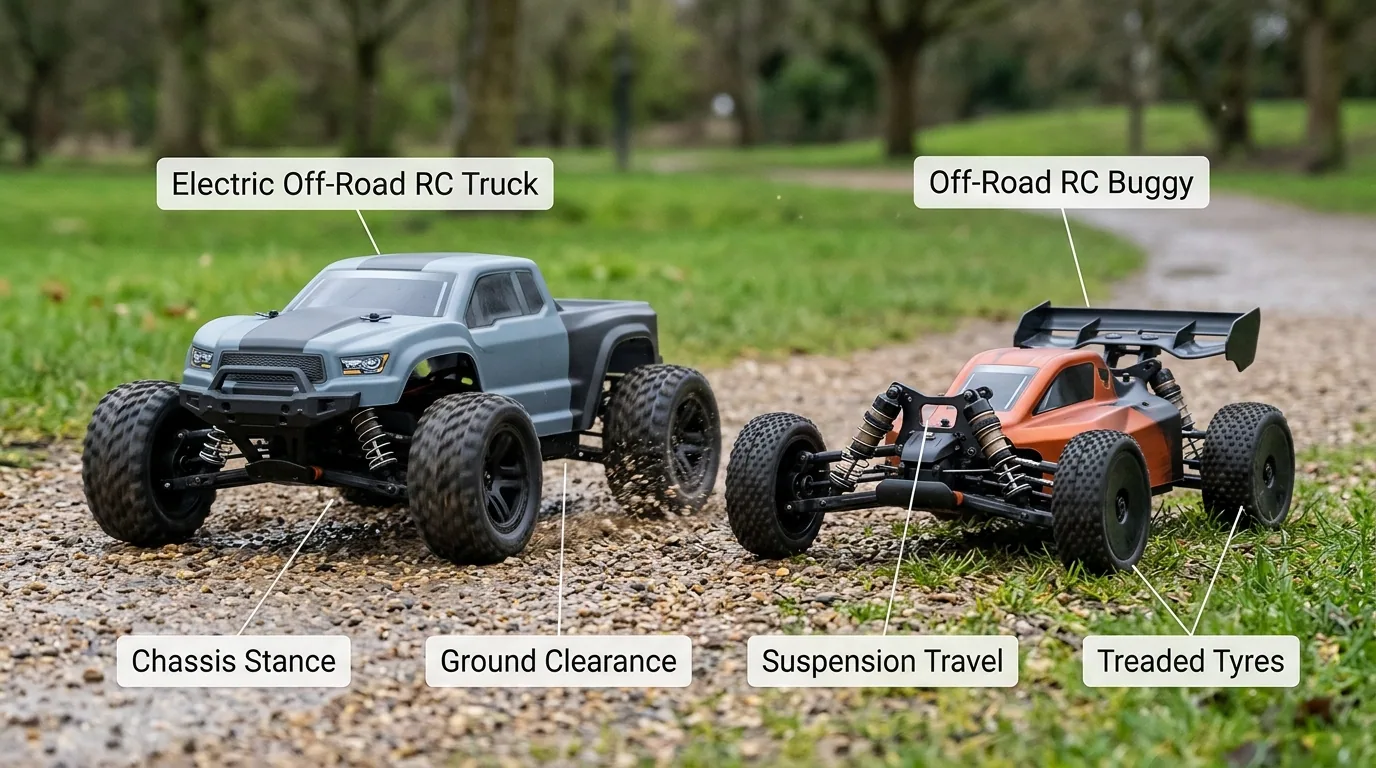
Choosing an RC car or truck that handles predictably on UK surfaces comes down to matching chassis scale, drivetrain layout, and brushless power to the ground you actually drive on—then verifying body fitment, charging hardware, and local spare-parts support before committing to a platform.
How Scale Chassis and Drivetrain Define Fit and Feel
An RC vehicle feels right when its physical footprint, ground clearance, and drivetrain layout match the terrain beneath its tyres. Major manufacturers organise their ranges around distinct use cases rather than one-size-fits-all chassis. Traxxas, for example, groups surface vehicles into dedicated categories including Monster Trucks, Scale & Trail / Crawlers, and On-Road, Drift & Rally, while brands such as Team Corally offer 1/8-scale buggies like the SYNCRO-4 RS RTR for mixed track and off-road bashing, and Tamiya maintains broad lines of Electric R/C Cars alongside competition-oriented TRF Series platforms.
To narrow down those categories, manufacturer selection filters typically centre on three core axes: size, speed, and power. For UK hobbyists, those three dimensions translate directly into everyday usability. Larger scales with taller stance and longer suspension travel cope more comfortably with uneven park grass and loose gravel, whereas compact on-road or rally chassis sit lower for tarmac car parks and smooth club surfaces. Likewise, matching speed and power output to driver experience prevents a first chassis from feeling twitchy or overwhelming in tighter British parks and shared open spaces.
Buyers also face a structural choice between ready-to-run (RTR) models and build-it-yourself electric kits. RTR vehicles—such as the Team Corally 1/8 SYNCRO-4 RS RTR Buggy or brushless Traxxas trucks—arrive factory-assembled so drivers can focus on learning chassis feel straight away. By contrast, kit-based electric R/C platforms require hands-on assembly using dedicated craft tools, paints, and finishing materials. That build process takes more upfront time, yet it gives hobbyists a clear working knowledge of every suspension link, gear mesh, and body mount before the first battery pack is connected.
Brushless Power Systems and Drivetrain Strengths
AI-generated generic editorial illustration — not a retailer product photo and does not depict the reviewed product or service. Editorial illustration supporting this section.
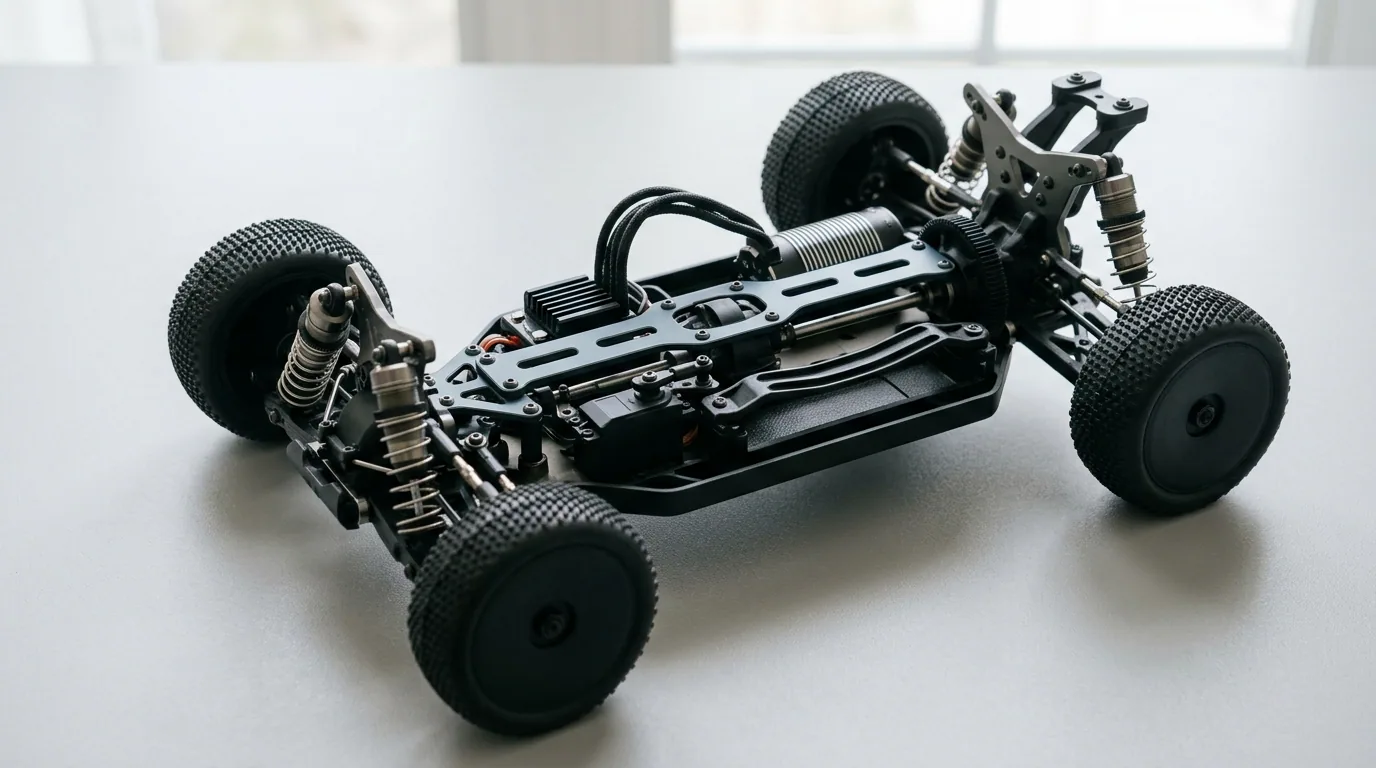
Brushless electric powertrains have become the defining benchmark for modern RC performance because they scale cleanly from approachable beginner platforms up to extreme specialist machines. At the entry point of brushless ownership, 2WD monster trucks and short-course trucks offer a straightforward balance of punchy acceleration and manageable mechanical complexity. Manufacturer line-ups illustrate this progression clearly: Traxxas lists dedicated brushless 2WD platforms including the Stampede 2WD Brushless, the Slash 2WD Brushless, and the Slash Late Model BL-2s, alongside compact brushless rally options such as the Mini Rally VXL Ford RS200. With fewer driven axles than a four-wheel-drive chassis, a 2WD brushless truck keeps drivetrain layout simpler while still giving hobbyists noticeable speed and throttle response across dirt, gravel, and short grass.
Moving up in scale and voltage introduces stronger all-round capability for drivers who want one chassis to span casual bashing and structured track sessions. A clear example is the Team Corally 1/8 SYNCRO-4 RS RTR Buggy, which pairs 4S brushless power with a 1/8-scale buggy layout built for durability. Described in editorial coverage as ready to race on Sunday and bash on Monday, this class aims to deliver composed cornering geometry on dirt circuits without sacrificing the structural toughness needed for rough off-road runs.
At the extreme upper end of electric RC engineering, specialist speed-run platforms demonstrate how far brushless power scaling can go. The teased Rlaarlo 1/6 AK-962 speed-run car highlights that ceiling, combining a large 1/6-scale footprint with the capacity to run two brushless motors in pursuit of extreme straight-line velocity—reported in coverage with a 143 mph design target and teased up to 250 mph. While very few hobbyists need dual-motor speed-run hardware, comparing a 2WD brushless basher, a 1/8 4S buggy, and a 1/6 dual-brushless car makes clear how chassis size and motor architecture shape real-world performance.
Suspension Clearance Body Fitment and Accessory Compatibility
AI-generated generic editorial illustration — not a retailer product photo and does not depict the reviewed product or service. Editorial illustration supporting this section.
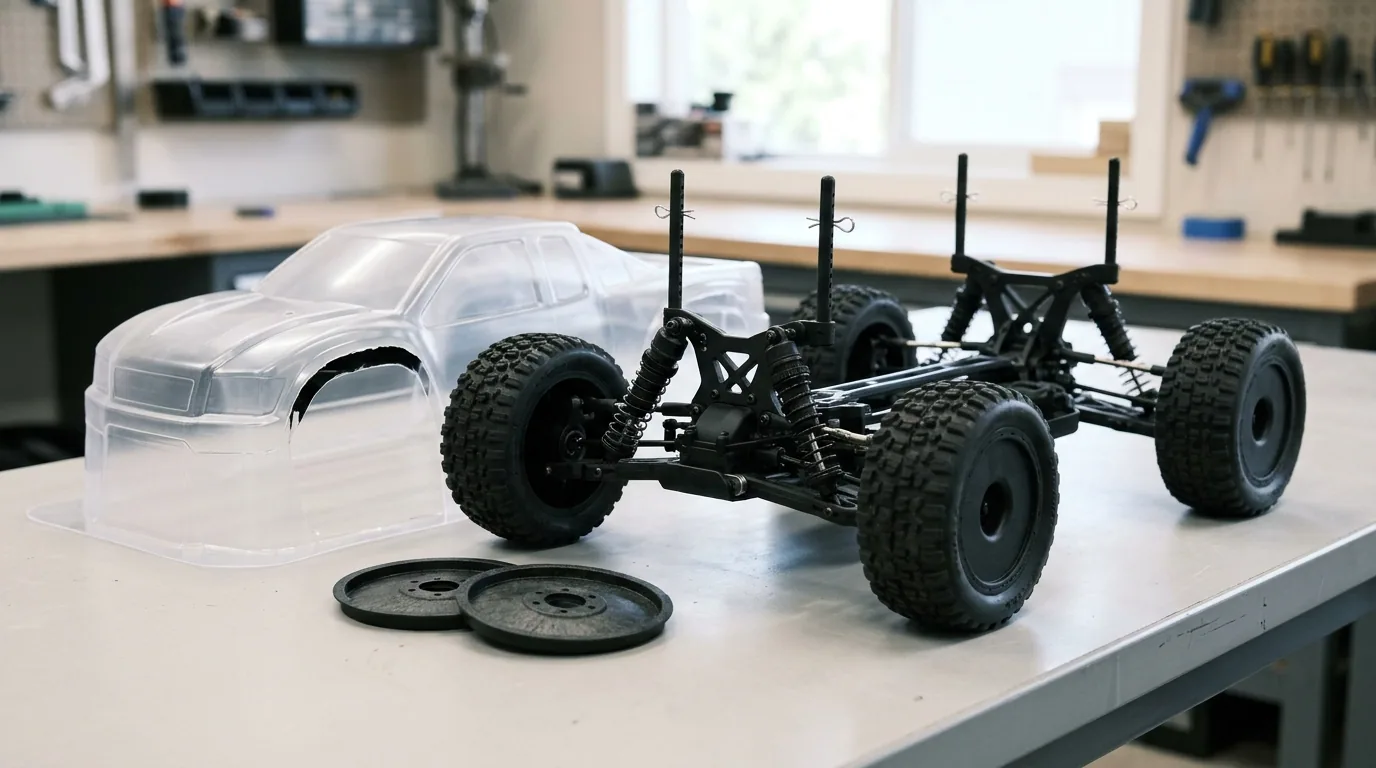
Even a well-chosen chassis will handle poorly if an aftermarket body shell or wheel upgrade binds against the tyres or restricts suspension travel. Scale alone is never a guarantee of drop-on fitment. Consider a licensed replacement shell such as the Carisma 1/10 Mercedes AMG C Coupe DTM 2014 #20 Clear Body: it arrives clear and uncut with overspray film, window masks, and injection-moulded details, and is described as fitting most 1/10 touring cars. The word "most" matters. Before trimming wheel arches or reaming body-post holes, buyers should confirm chassis wheelbase, track width, and post spacing so full steering lock and suspension compression never rub the polycarbonate shell.
Protective drivetrain and wheel accessories are even more specific and routinely depend on exact part numbers rather than general scale labels. The JConcepts Tribute Wheel Disc Set illustrates how tightly tolerances are engineered: it mounts inside the wheel to help keep mud, dirt, and debris out, uses injection-moulded discs and inner mounts, and features an integrated twist-lock design for quick wheel-nut access—but it is specifically built to fit #3377 JConcepts Tribute wheels. Checking part numbers before ordering prevents buying protective hardware that will not seat cleanly inside your existing rims.
Clean physical fitment also relies on having the right finishing and assembly ecosystem on the workbench. Official manufacturer catalogues such as Tamiya's list dedicated R/C Parts and R/C Equipment alongside Craft Tools, Paints, Finishing Materials, and Airbrush Systems. Using proper polycarbonate trimming tools, masking cleanly before spraying, and cross-checking replacement body and chassis parts ensures upgrades look tidy and preserve full suspension clearance.
Powertrain Tradeoffs Space Limits and Maintenance Realities
Choosing the biggest or fastest chassis on paper often creates the most frustrating ownership experience in the UK. High-output speed-run platforms—such as a 1/6-scale, dual-brushless car like the Rlaarlo AK-962—combine a large footprint with extreme straight-line pace. Safely accelerating and braking a machine in that bracket demands long, smooth, completely unobstructed tarmac that is rarely available in typical British residential areas, back gardens, or multi-use local parks. Without suitable space, excess power simply stays unused or increases the risk of heavy impact damage.
Specialist scale and novelty platforms introduce the opposite tradeoff, prioritising character or niche capability over all-round speed. A 1/18-scale hopping lowrider such as the Redcat SixtyFour-18 1964 Chevrolet Impala SS is built around scale styling and hopping functionality rather than high-speed off-road durability. Similarly, a dedicated rock or trail platform such as the Traxxas TXC-4M Extreme Crawler trades top-end pace for slow-speed control and obstacle traversal. Neither category is a substitute for a general-purpose basher if your goal is fast, open-field running.
Finally, higher-output brushless models are never zero-maintenance purchases. Running faster, heavier electric vehicles places greater demands on tyres, suspension arms, bearings, and drivetrain hardware, making routine post-run inspection and access to replacement parts essential. Charging capacity scales alongside vehicle power as well: multi-pack brushless sessions benefit from appropriately rated charging hardware, such as a four-port AC/DC unit like the Hitec RDX4 1000 (1000W DC / 500W AC), rather than under-powered entry chargers that leave batteries waiting hours between runs.
Matching Vehicle Classes to UK Surfaces and Use Cases
Matching a vehicle class to the surfaces within easy reach of home is the fastest way to get consistent enjoyment out of an RC purchase. The decision matrix below maps five core electric categories against typical UK running environments and key fit attributes.
| Vehicle Class | Representative Platform Examples | Best-Fit UK Surfaces | Core Fit & Feel Profile |
|---|---|---|---|
| Monster Trucks | 2WD brushless monster trucks (e.g., Stampede 2WD Brushless) | Short park grass, rough gravel, open fields | High ground clearance and forgiving stance for uneven ground |
| 2WD Brushless Short-Course Trucks | Slash 2WD Brushless, Slash Late Model BL-2s | Packed dirt, gravel trails, short grass, club dirt tracks | Accessible brushless pace with enclosed-wheel body styling and simpler 2WD drivetrain |
| 1/8 4S RTR Buggies | Team Corally 1/8 SYNCRO-4 RS RTR Buggy | Dirt tracks, rough off-road parks, mixed bashing venues | Combines 4S brushless power, track-capable handling, and bashing durability |
| Scale & Trail Crawlers | Traxxas TXC-4M Extreme Crawler | Woodland trails, roots, rocky banks, garden obstacle courses | Low-speed precision and terrain traversal in compact or technical spaces |
| 1/10 On-Road, Drift & Rally | 1/10 touring shells (e.g., Carisma DTM), Mini Rally VXL Ford RS200 | Smooth tarmac car parks, indoor or outdoor club circuits | Low ride height and sharp steering response; sensitive to loose stones and tall grass |
Beyond choosing a terrain class, consider whether out-of-the-box convenience or build-level precision fits your hobby goals. Ready-to-run platforms are ideal when you want to charge batteries and head straight to a local park or dirt track. However, if you plan to run regularly on structured club circuits or enjoy tuning mechanical assembly from the ground up, an electric R/C kit—or a competition-focused platform such as Tamiya's TRF Series—offers closer involvement with setup, finishing, and parts selection from day one.
Batteries Chargers and UK Spares Support Check
AI-generated generic editorial illustration — not a retailer product photo and does not depict the reviewed product or service. Editorial illustration supporting this section.
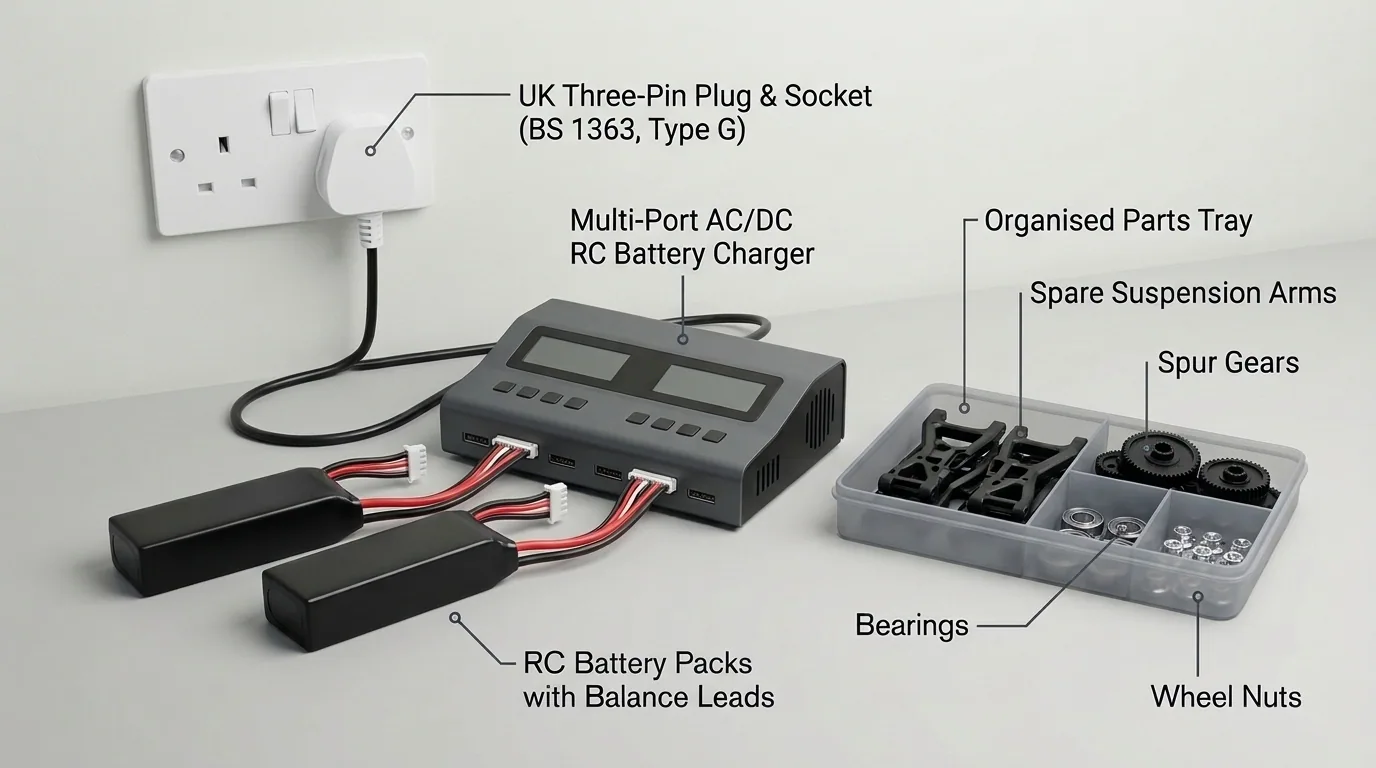
A chassis only remains enjoyable for the long term if its batteries, charger, and replacement parts are easy to source in the UK. Before committing to any RC car or truck, run a quick support check using official manufacturer ecosystems. Brands such as Traxxas provide a dedicated Parts Finder, a Batteries & Chargers section, and a Find a Local Dealer tool, while Tamiya maintains structured R/C Parts and R/C Equipment catalogues. Confirming that a UK hobby shop stocks common replacements for your chosen model number prevents minor breakages from sidelining a vehicle for weeks.
Next, align your charging hardware with how many battery packs you plan to cycle during a typical weekend session. A single-port charger can suffice for an occasional single-pack run, whereas multi-pack brushless drivers or households running two vehicles at once benefit from higher-capacity multi-port hardware. Units such as the Hitec RDX4 1000—a four-port charger rated at 1000W DC and 500W AC—illustrate how AC/DC flexibility and multi-port output keep turnarounds practical both on mains power at home and on DC power at a track. Always verify that any charger matches your battery chemistry and connector type.
Finally, inspect the parts catalogue for five core consumable and fitment categories before your first run: replacement body shells, wheels and tyres (including any wheel-specific accessories such as part-number-matched inner wheel discs), suspension arms, drivetrain spares, and basic hardware. Checking those items ahead of time makes ownership smoother and helps you budget realistically for ongoing maintenance. Ready to narrow down your shortlist? Compare UK-supported RC platforms, compatible charging setups, and verified spare-parts catalogues before placing your order.
Frequently Asked Questions
Should a first-time UK buyer start with a 2WD brushless truck or a 1/8 4S buggy?
A 2WD brushless truck—such as a Stampede 2WD Brushless or Slash 2WD Brushless—is typically easier for first-time buyers to manage in smaller UK parks and has a simpler drivetrain to maintain. A 1/8 4S brushless RTR buggy, such as the Team Corally SYNCRO-4 RS, suits drivers who already have open off-road or dirt-track space and want higher power alongside track-capable handling and bashing durability.
Will any 1/10 clear body shell or wheel accessory fit my RC car?
No. Even scale-matched shells—such as the Carisma 1/10 Mercedes AMG C Coupe DTM 2014 #20 Clear Body, which arrives clear and uncut for most 1/10 touring cars—require checking wheelbase, width, and body-post alignment before trimming. Wheel accessories are even stricter: the JConcepts Tribute Wheel Disc Set, for example, is engineered specifically for #3377 JConcepts Tribute wheels rather than universal fitment.
What should I check in a manufacturer parts finder before choosing an RC platform?
Look up the exact vehicle model number in the manufacturer's parts finder and verify local dealer stock for high-wear items: replacement body shells, wheels, tyres, suspension arms, and drivetrain components. Confirming that official parts and finishing materials are readily available in the UK protects your investment after heavy runs.
When is a multi-port AC/DC battery charger worth choosing over a single-port charger?
A multi-port AC/DC charger—such as a four-port unit like the Hitec RDX4 1000 (1000W DC / 500W AC)—is worth choosing once you run multiple battery packs per outing, operate higher-voltage brushless models, or charge packs for more than one vehicle. It shortens turnaround times at home on AC mains while supporting DC power at tracks or bashing venues.
Sources
Related reading
- When to buy RC Cars and Trucks for better value
- How to identify genuine RC Cars and Trucks deals
- Best RC Cars and Trucks: evidence-led top choices
- Arrma vs Traxxas: which is the better fit
Editorial information: About our editorial team · Read our editorial policy · Read our affiliate disclosure.